
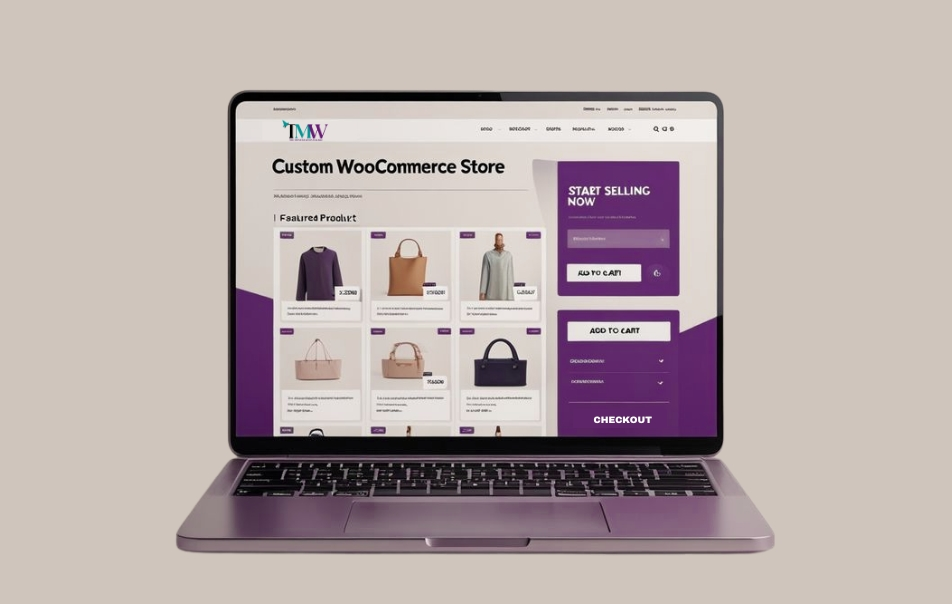
In 2026, ecommerce web development is not a luxury for Australian businesses; it is the foundation of sustainable growth. Whether you operate in fashion, healthcare, home goods, electronics, or professional services, your online store is often the first point of contact between your brand and a potential customer. A slow, poorly structured, or visually underwhelming website does not just fail to convert; it actively drives customers toward competitors.
Ecommerce in Australia continues to grow rapidly, with Australians spending a record $69 billion online in 2024–25, according to the Australia Post eCommerce Report 2025. The online retail spending has grown consistently over the past several years, with projections indicating continued acceleration through 2026.
Consumers across the country expect fast, mobile-optimised, and secure online shopping experiences. Businesses that invest in high-quality ecommerce web development are better positioned to capture this demand and build long-term customer loyalty.
Key Takeaways
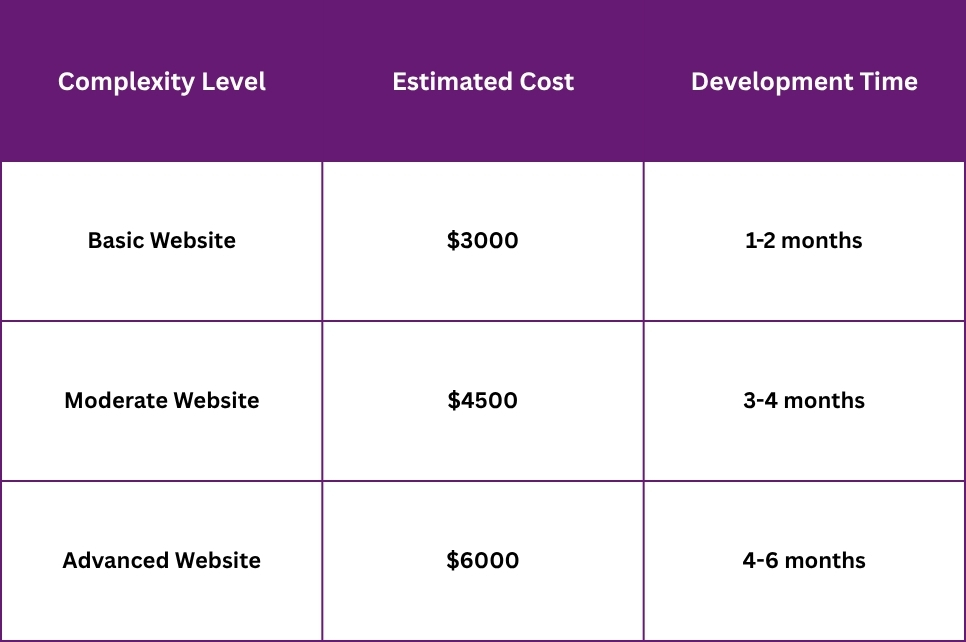
- A professionally built ecommerce web development in Australia typically costs between $3,000 and $6,000 USD, depending on complexity, features, and scalability requirements.
- Development timelines range from 1 to 4 months, based on the level of customisation, integrations, and functionality required.
- Basic ecommerce web development services ($3,000) suits startups entering the market; mid-level builds ($4,500) support growing brands; advanced platforms ($6,000) are designed for large or high-traffic businesses.
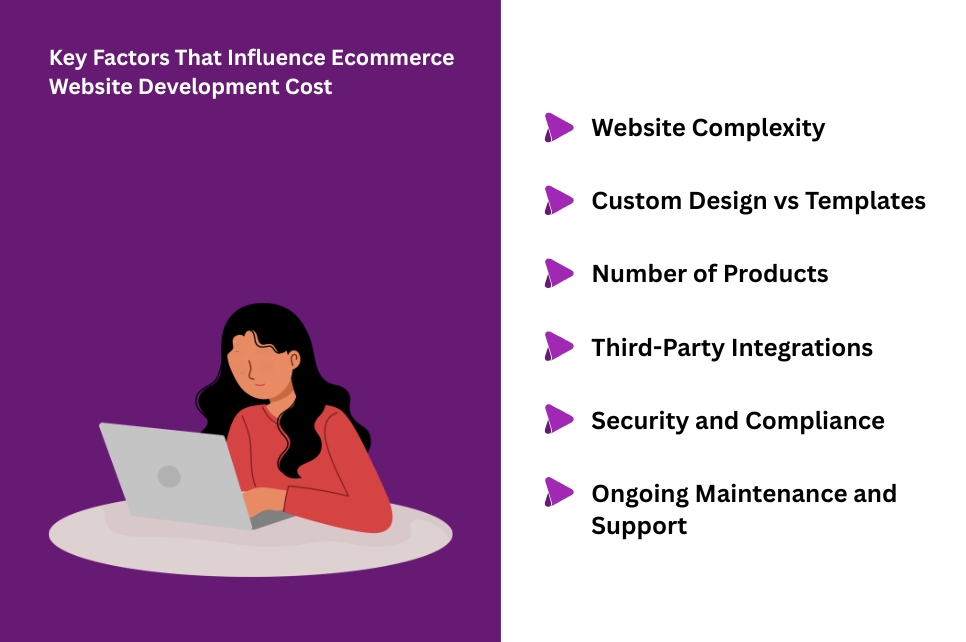
- Core cost factors include design complexity, number of products, third-party integrations, security requirements, and ongoing maintenance.
- Choosing the right platform, whether WooCommerce, Shopify, or a custom stack, plays a significant role in long-term flexibility, SEO performance, and total cost of ownership.
- Working with experienced ecommerce developers in Melbourne, Sydney, or Canberra gives Australian businesses a local advantage in design, strategy, and post-launch support.
This guide is written for business owners who actually want a clear picture of what ecommerce website development costs, how long it takes, and what to look for when choosing a development partner in Australia.
You will find:
- A breakdown of three ecommerce web development tiers with costs and timelines
- The essential features every ecommerce store should include
- The key factors that influence your total ecommerce website development cost
- A comparison of leading ecommerce platforms
- How TMW’s ecommerce development services operate across Melbourne, Sydney, and Canberra
Ecommerce Website Development Cost
Ecommerce web development is not a fixed-price product. The investment required depends on the size of your catalogue, the complexity of your design, the platforms and tools you need to integrate, and how much custom functionality your business requires.
To make cost comparisons more practical, ecommerce websites are best understood across three tiers: Basic, Medium, and Advanced.
Basic Ecommerce Web Development
Development Time: 1–2 Months
A basic ecommerce build is the right starting point for startups, local businesses, and brands entering the online retail space for the first time. At this level, the goal is to create a clean, functional, and professional online store that allows customers to browse products, make purchases, and receive order confirmations without friction.
A $3,000 ecommerce website typically includes a professionally designed storefront, product listings for up to 50 items, mobile-responsive layouts, secure payment gateway integration, and standard shipping configuration. Core pages are structured and connected, and basic SEO settings are applied to ensure the site is discoverable by search engines.
Medium Ecommerce Website
Development Time: 3-4 Months
A medium-level ecommerce website is designed for growing businesses that need more than a basic presence. At this tier, the focus shifts toward customer experience, conversion optimisation, and the integrations required to support a scaling operation.
This level of development of a $4,500 website includes a fully custom design aligned with your brand identity, product catalogues of up to 200 items with advanced filtering and categorisation, and a content or blog section to support SEO and organic traffic growth. Email marketing integrations, analytics dashboards, and optimised checkout flows are standard at this tier. Multiple payment methods are supported, and basic automation is included.
Advanced Ecommerce Web Development Services
Development Time: 4-6 Months
An advanced ecommerce website is built for brands that require enterprise-level functionality, high-traffic performance, and deeply custom workflows. At this tier, development teams design and build a platform that can scale alongside the business, handling large product volumes, complex integrations, and sophisticated customer journeys.
Advanced builds, which cost around $6000 or more, include a fully custom design and front-end development, support for hundreds or thousands of products, and integration with CRM systems, ERP platforms, inventory management tools, and marketing automation stacks.
AI-driven product recommendations, multi-currency checkout, multi-language support, and advanced analytics are also included. In this built, security architecture, performance optimisation, and scalability planning are treated as core components rather than afterthoughts.
Top Features Your Ecommerce Store Should Have
The difference between an ecommerce website that converts and the ecommerce web development that loses customers often comes down to a small number of well-executed features. Regardless of budget tier, the following are non-negotiable for any competitive Australian online store in 2026.
1. Mobile-First Design
The majority of Australian online shoppers browse and purchase via mobile devices. A mobile-first approach means your store is designed for smaller screens first, then scaled up, not the reverse.
This directly affects user experience, bounce rates, and SEO rankings.
2. Fast Load Times
Page speed is a conversion factor. Research consistently shows that each second of delay reduces conversion rates.
Your ecommerce web design should load in under three seconds, supported by image optimisation, lean code, and reliable hosting infrastructure.
3. Secure and Streamlined Checkout
Customers abandon carts when checkout is slow, confusing, or feels insecure. SSL certificates, trusted payment gateways, guest checkout options, and minimal form fields are all essential to reducing abandonment.
All these factors then help in increasing completed purchases.
4. Product Search and Filtering
Shoppers who cannot quickly find what they are looking for leave. Robust search functionality and category filtering allow customers to navigate large catalogues efficiently, improving both satisfaction and conversion.
5. Customer Reviews and Social Proof
Authentic product reviews and ratings are among the most influential factors in online purchase decisions.
Integrating a review system and displaying it prominently increases trust and reduces purchase hesitation.
6. SEO-Optimised Architecture
An ecommerce web development built with clean URLs, structured data, fast load speeds, and properly configured product pages will perform significantly better in organic search than one that treats SEO as an afterthought.
7. Analytics and Reporting
Understanding where your customers come from, how they navigate your site, and where they drop off is essential for continuous improvement.
Enabling analytics allow you to make data-driven decisions about marketing, merchandising, and user experience.
Key Factors That Influence Ecommerce Website Development Cost
Understanding what drives ecommerce development costs helps you make more informed decisions about where to invest and where to simplify.
The following are the primary factors that affect total project cost.
Website Complexity and Custom Functionality
The more complex the logic, like custom pricing rules, member portals, product configurators, or bespoke checkout flows, the more development time is required.
Complexity is the single largest cost driver in ecommerce projects.
Design Approach: Custom vs Template
A store with 20 simple products is significantly faster to build than one with 500 products across multiple variants, attributes, and pricing structures.
Large catalogues require additional setup time, content work, and performance optimisation.
Third-Party Integrations
Connecting your ecommerce store to external systems, such as CRM platforms, email marketing tools, shipping providers, accounting software, or point-of-sale systems, increases the overall development scope.
It also adds ongoing maintenance and integration requirements over time.
Security and Compliance Requirements
Businesses handling sensitive customer data, financial transactions, or operating in regulated industries face additional security requirements.
Advanced protection measures, compliance configurations, and security audits increase development cost but are essential for long-term risk management.
Ongoing Maintenance and Support
A launched website is not a finished product. Regular updates, performance monitoring, plugin management, backups, and security patches are ongoing requirements. Factoring monthly maintenance costs into your overall budget ensures the investment remains protected after launch.
Top Platforms and Technologies for Ecommerce in 2026
Choosing the right platform is one of the most consequential decisions in an ecommerce project.
The platform affects everything from development flexibility, long-term scalability, and SEO performance to integration options and total cost of ownership.
WooCommerce (WordPress)
WooCommerce remains one of the most widely used ecommerce platforms globally. Built on WordPress, it offers complete ownership of your site, unmatched flexibility, and strong SEO capabilities.
It is best suited to businesses that want full control over their platform and content strategy, and it scales effectively from small stores to enterprise-level operations.
Shopify
Shopify is a hosted ecommerce platform designed for ease of use and rapid deployment. It is well-suited to businesses that want a reliable, out-of-the-box solution with minimal technical overhead.
While Shopify simplifies operations, it involves ongoing subscription fees and places limits on certain customisations compared to open-source alternatives.
Magento / Adobe Commerce
Magento is built for enterprise-grade ecommerce operations. It supports complex product catalogues, multi-store configurations, and advanced B2B functionality.
The development and maintenance requirements are higher, making it most appropriate for large businesses with dedicated technical resources.
Headless and Custom Builds
Headless ecommerce architectures, where the front-end and back-end are decoupled, offer maximum flexibility and performance. They are the right choice for businesses with highly specific user experience requirements or complex integrations, but they require more sophisticated development expertise and higher upfront investment.
The best platform for your business depends on your growth plans, internal resources, and the specific features your customers expect.
An experienced ecommerce development team can help you evaluate options objectively and build on the platform that delivers the best long-term return.
Ecommerce Web Development in Australia with TMW
At The Monetization Wizard, we specialise in building ecommerce websites and offer expert WordPress development services designed to perform, not just look good.
We bring strategy, design, and technical development together to build online stores that attract the right traffic, convert visitors into customers, and grow with your business.
Our team works with brands at every stage of growth, from first-time online retailers to established businesses expanding their digital operations.
Melbourne
Melbourne is one of Australia’s most competitive retail markets, with a sophisticated consumer base and a growing demand for seamless digital shopping experiences.
Our Melbourne ecommerce web development clients operate across industries including fashion, homewares, food and beverage, health and wellness, and professional services.
We build ecommerce websites that reflect the design sensibility Melbourne consumers expect, clean, considered, and conversion-focused. From strategy through post-launch optimisation, our Melbourne team offers end-to-end support personalized to this market.
Whether you are launching a new brand or rebuilding an underperforming store, we bring the local knowledge and technical capability to deliver results.
Sydney
Sydney’s ecommerce market is large, fast-moving, and highly competitive. We work with Sydney-based businesses to build online stores that stand out in crowded categories and deliver measurable commercial outcomes.
Our development process prioritises speed, mobile performance, and SEO, the three factors that most directly influence organic visibility and revenue growth in Sydney’s digital landscape.
Canberra
The business community in Canberra is growing, and demand for professional ecommerce solutions is increasing alongside it.
We support Canberra-based brands in building online stores and run social media marketing campaigns that compete nationally, using the same design quality and technical rigour we apply across all our Australian projects.
Conclusion
For Australian businesses in 2026, investing in ecommerce web development is one of the highest-return digital decisions available.
A $3,000 build provides a professional, functional foundation for new market entrants. A $4,500 investment supports growth, optimisation, and improved customer experience.
A $6,000 advanced platform delivers the scalability, performance, and custom functionality required for high-growth and high-traffic operations.
The return on this investment is realised not just at launch, but over time, as organic traffic grows, conversion rates improve, and the platform adapts to the evolving needs of the business. The most important factor is not how much you spend, but whether the website is built with the right strategy, platform, and team.
If you are ready to build or rebuild your ecommerce presence, The Monetization Wizard is here to help. Get in touch with our team to discuss your project, your goals, and the investment required to get there.
Frequently Asked Questions
Start by looking for agencies with demonstrated ecommerce experience, verifiable reviews, and a clear post-launch support process.
If you are in Australia, an agency that understands the market matters, local payment infrastructure, and Australian consumer expectations.
The Monetization Wizard specialises in ecommerce web development across Melbourne, Sydney, and Canberra.
Reach out to discuss your project.
Yes, most modern templates on WooCommerce and Shopify are mobile-responsive by default. They are a low-cost starting point, but customising them to fit your brand often costs more than expected.
For businesses with a budget of $3,000 or more, a custom ecommerce web design built around your catalogue and customer journey will outperform a modified template in both performance and conversion.
To set up a secure payment gateway for an online store, start by choosing a trusted payment provider such as Stripe, PayPal, or Square that supports encrypted transactions and fraud protection features.
A secure setup typically includes:
- Installing an SSL certificate (HTTPS) on your website
- Using hosted or tokenized payment solutions to reduce exposure to card data
- Keeping your eCommerce platform, plugins, and server updated
- Enabling fraud detection and multi-factor authentication where available
- Following applicable PCI DSS security requirements for handling payment information
For most small and medium-sized online stores, using a reputable third-party payment gateway significantly reduces the complexity of managing sensitive cardholder data directly.
WooCommerce and Shopify are the most widely used for good reason.
WooCommerce gives you full ownership and strong SEO flexibility; Shopify prioritises ease of use and reliability at the cost of ongoing subscription fees.
BigCommerce is a solid option for businesses expecting rapid growth. Squarespace and Wix work for very small catalogues but have real limitations at scale.
Hosted platforms (Shopify, BigCommerce) manage your infrastructure for you: convenient, reliable, but involve ongoing fees and some customisation limits.
Self-hosted solutions (WooCommerce, Magento) give you full ownership, unlimited flexibility, and no platform fees, but require more technical management.
For Australian ecommerce web development businesses with growth ambitions and a serious SEO strategy, self-hosting typically delivers better long-term value. Not sure which fits your situation? At The Monetization Wizard, we offer consultations to help you decide.
Start by reviewing how your business plans to or currently tracks stock and orders. Then choose an inventory management system that works with your ecommerce platform, popular options include Cin7, DEAR Inventory, and Unleashed Software.
The system is usually connected to your online store through a plugin or API integration. It’s important to organise your product data and SKUs correctly, set up stock syncing rules, and test everything carefully before launch to avoid inventory issues.
The best time to plan inventory integration is during the early stages of your ecommerce project, not after the store has already been built.
TMW includes inventory integration scoping in all medium and advanced ecommerce projects as standard.
A successful online shop should be fast, easy to use, and built to create a smooth shopping experience on all devices. Essential features include a mobile-friendly design, fast loading speeds, secure checkout, clear product pages, search and filtering tools, customer reviews, SEO-friendly structure, and integrated analytics to track performance.
These features help improve user experience, build trust, and increase conversions, making them essential for any modern ecommerce website, not just optional extras.
At The Monetization Wizard, these core features are included as standard across all ecommerce projects, from entry-level online stores to advanced custom platforms.
